1. Prepare Pork Hock and Beef Brisket
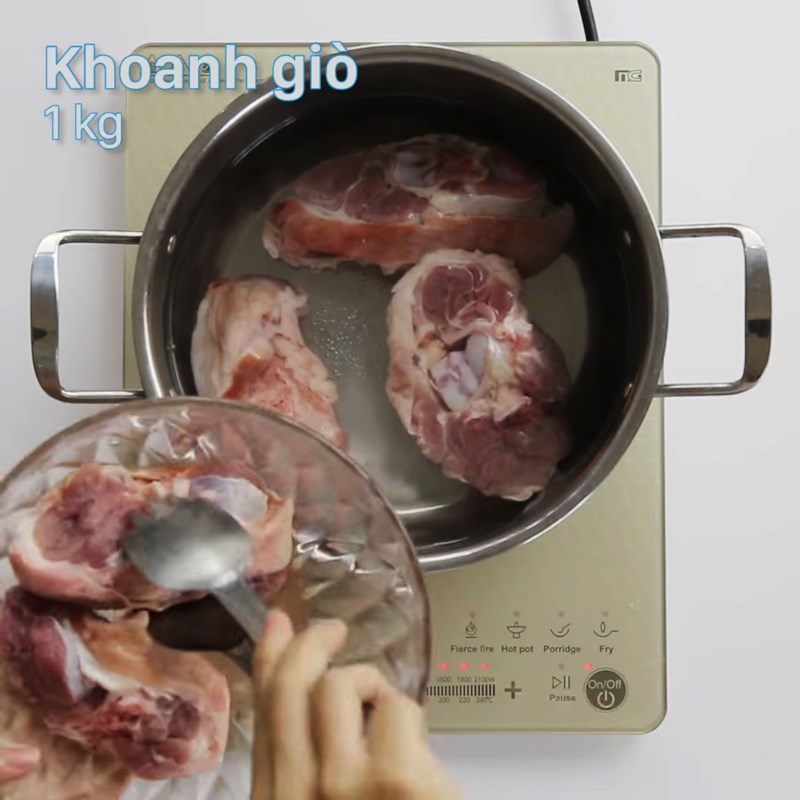
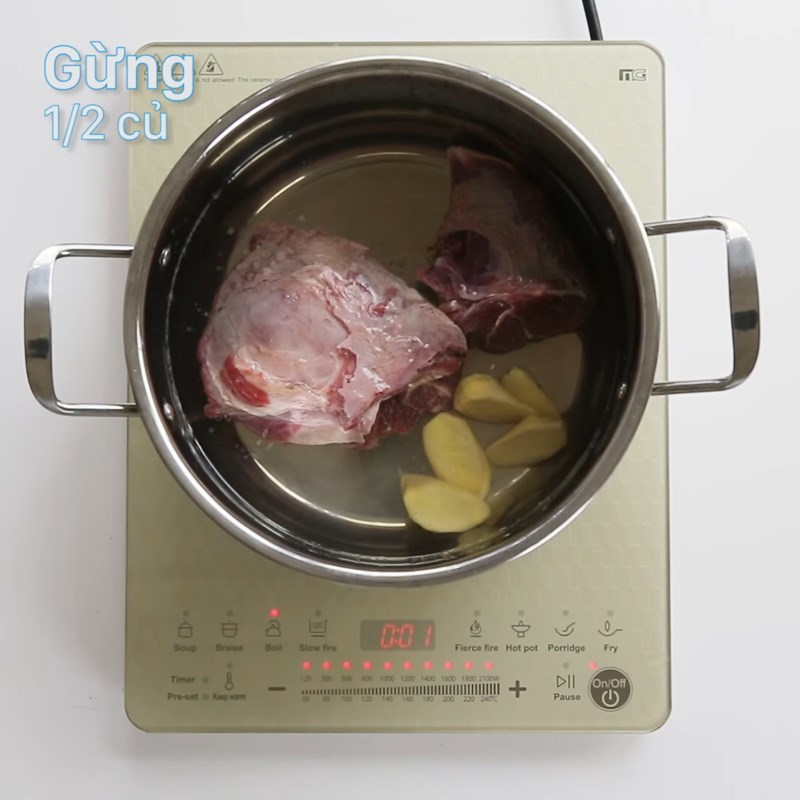
Choose pork hock depending on your preference: rear legs for more meat, front legs for more skin and tendon. Chop into thick rounds and rinse clean. Parboil the hock briefly to remove impurities, then rinse again.
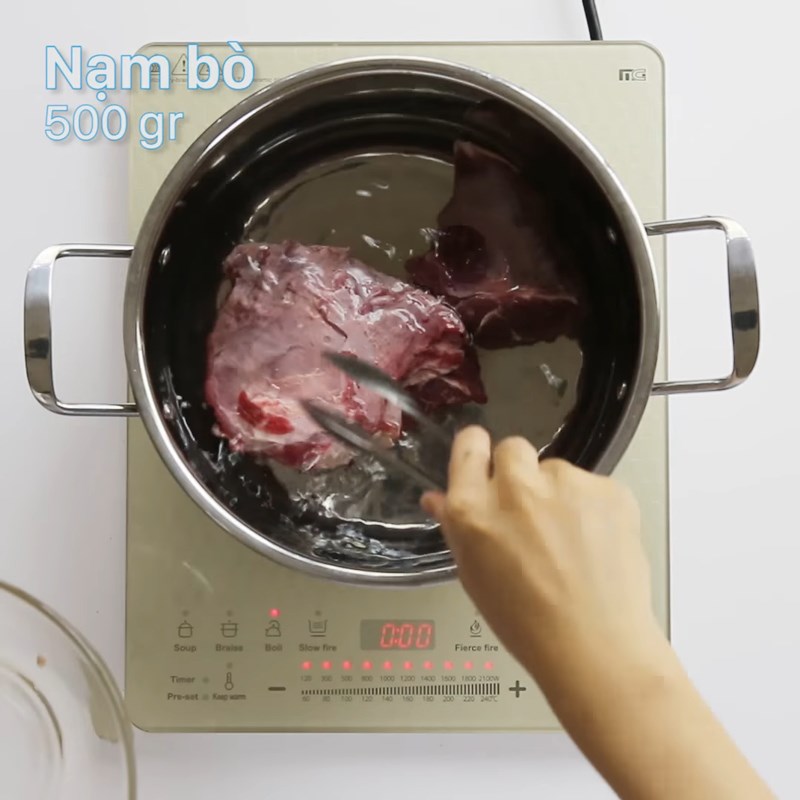
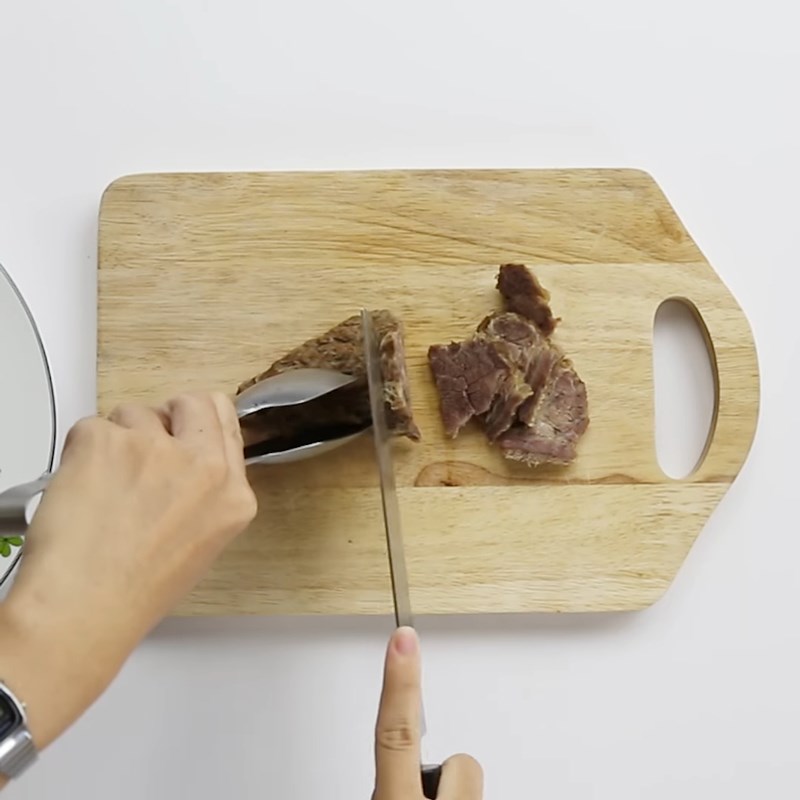
Rinse the beef brisket and boil it separately with half a sliced ginger root for aroma. Simmer over low heat for about 2 hours. To check doneness, insert a chopstick — if it goes through easily, the meat is ready. Let the beef cool before slicing thinly.
2. Prepare Other Ingredients
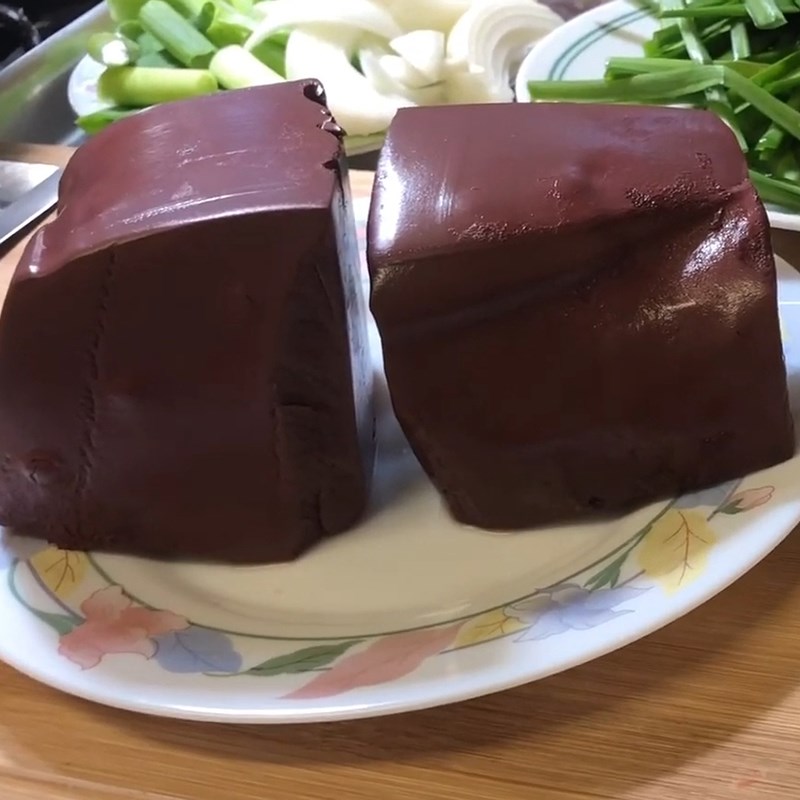
You can buy pork or beef blood jelly pre-cooked, or boil raw blood jelly yourself and slice into bite-sized pieces (make sure to buy from a trusted source). Skip this if you don’t prefer blood.
Form small round balls from crab paste (chả cua) and drop them into the brisket broth. When they float, they’re done — remove and set aside. You can also substitute crab paste with beef patties or skip it.
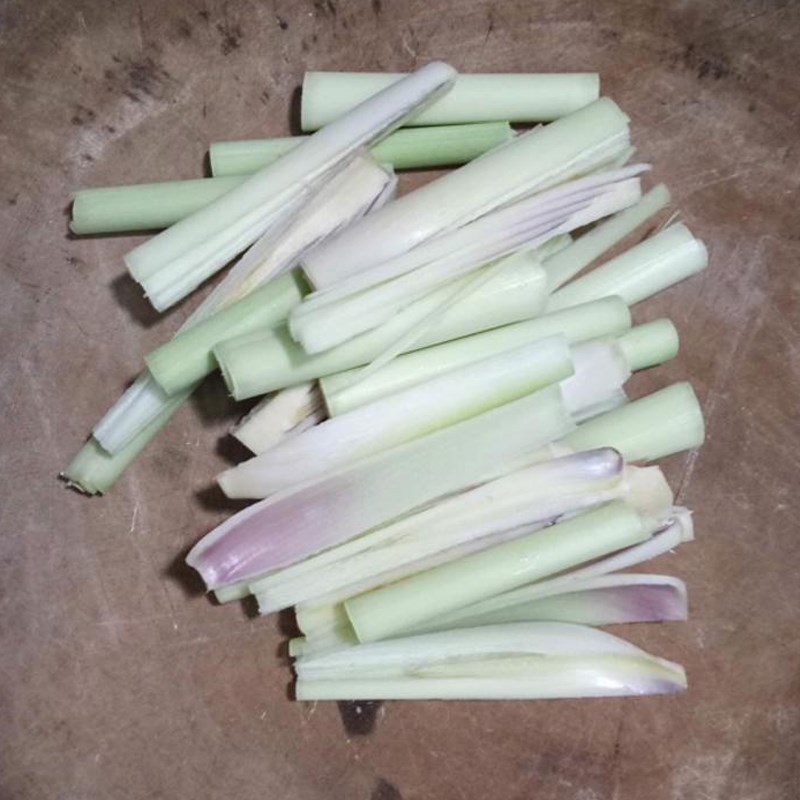
Finely chop 4 stalks of lemongrass; cut the rest into long pieces and bruise them. Slice half an onion thinly, and halve the other half.
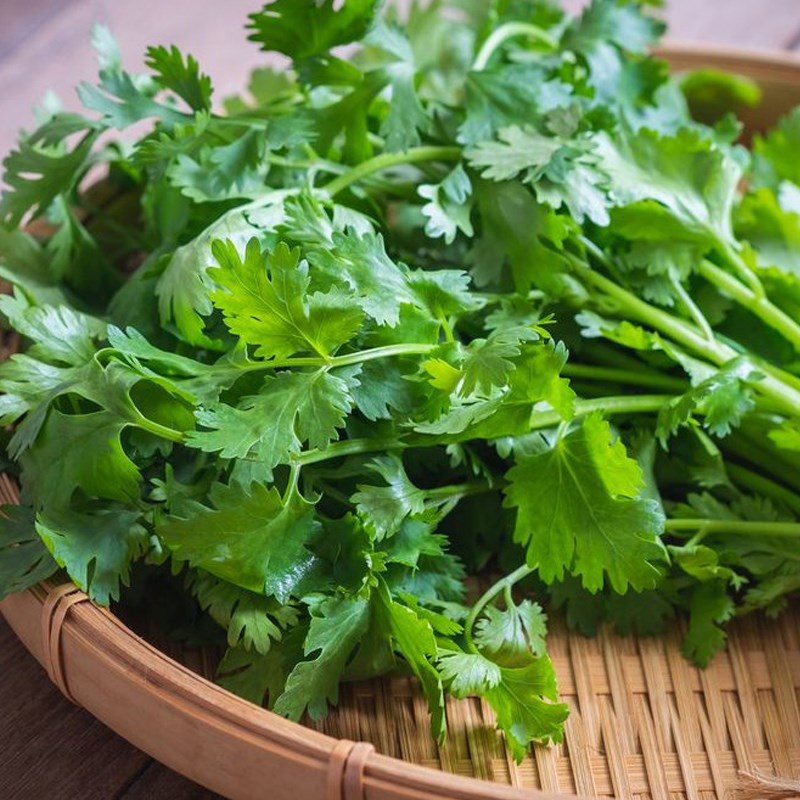
Rinse and chop scallions, Vietnamese coriander (ngò gai), and Thai basil. Prepare all side vegetables by rinsing and draining thoroughly.

3. Cook the Broth
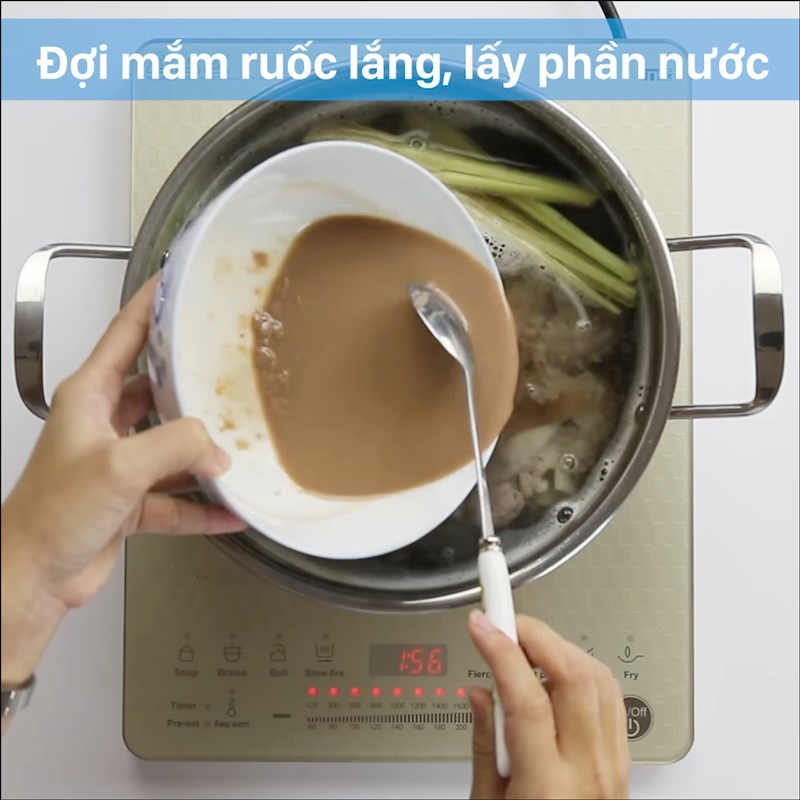
Dissolve 2 tablespoons of fermented shrimp paste (mắm ruốc) in 100ml cold water. Let it settle and only use the clear upper liquid.
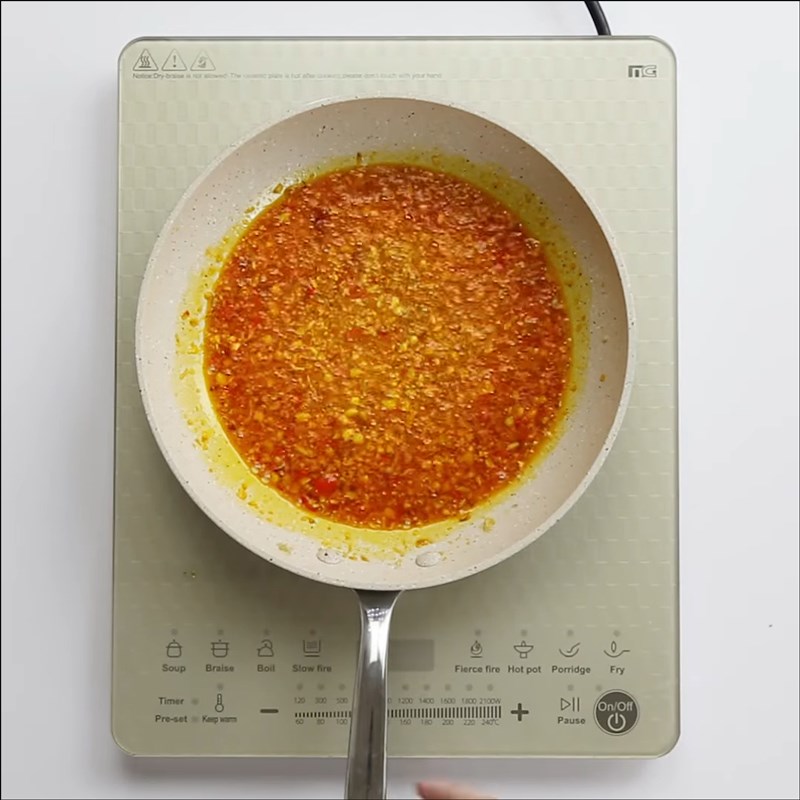
Sauté 4 chopped lemongrass stalks in 2 tablespoons of oil. Remove part of the lemongrass and stir in 3 tablespoons of annatto oil. Finely mince 1 onion, 1 garlic bulb, and 2 red chilies, then sauté them until golden. Set aside — this will be your chili oil.
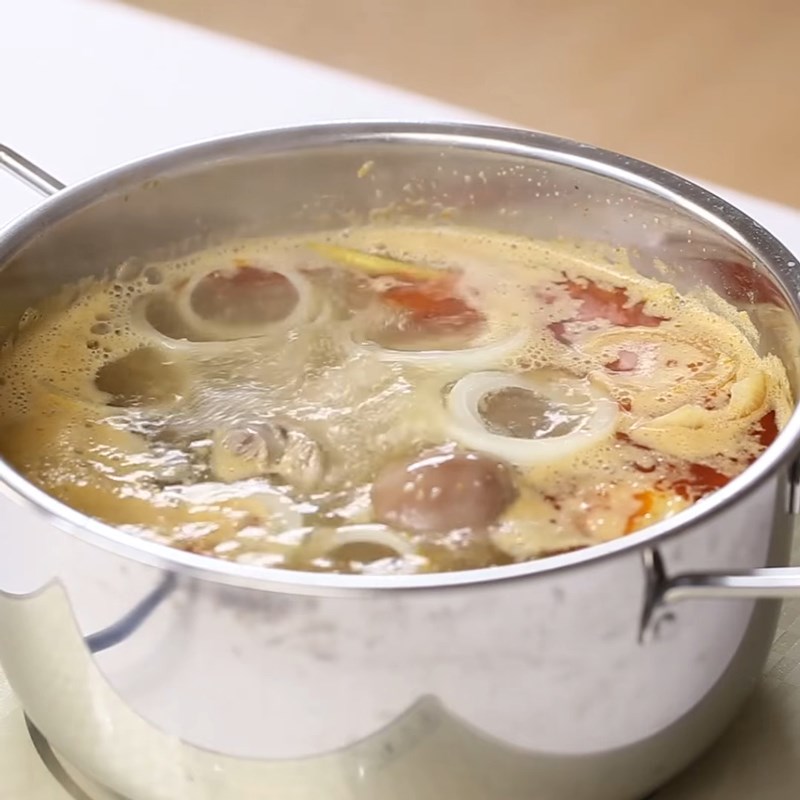
Simmer the pork hock in a new pot with halved onion and 3 bruised lemongrass stalks. Skim any foam for a clear broth.
Add the clear portion of the shrimp paste water, 2 tablespoons sugar, 2 tablespoons seasoning powder, 1 tablespoon salt, and adjust to taste. Add the sautéed chili oil mixture last.


4. Assemble
Blanch rice noodles in hot water, drain, and place into bowls.
Top with sliced beef brisket, pork hock, crab paste, blood jelly, herbs, and sliced onion. Ladle the hot broth over the toppings.
Serve with bean sprouts, banana blossom, Thai basil, and a dollop of chili paste for an authentic experience.
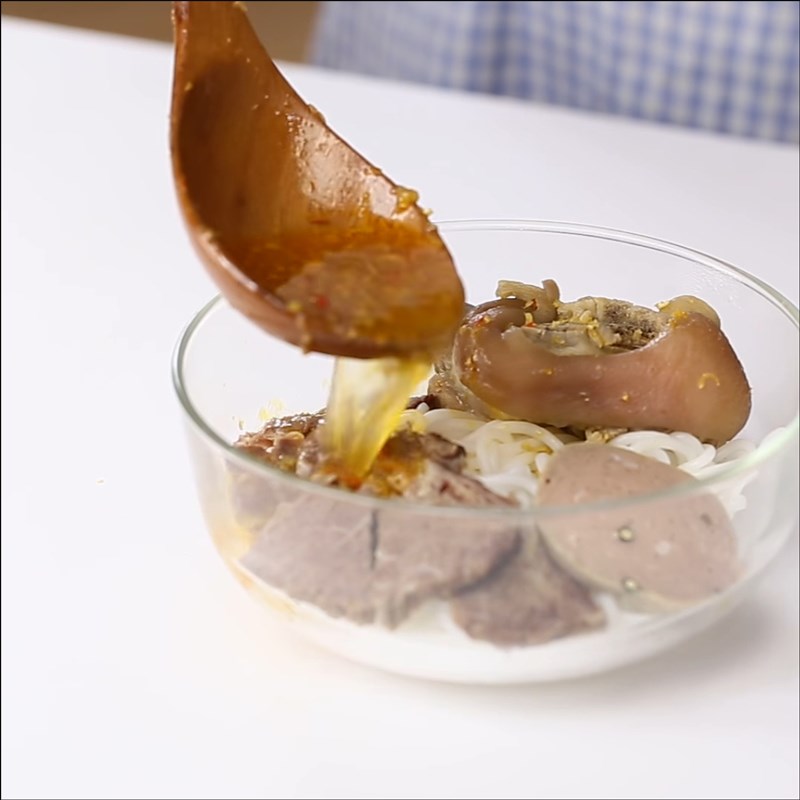
5. Finished Dish
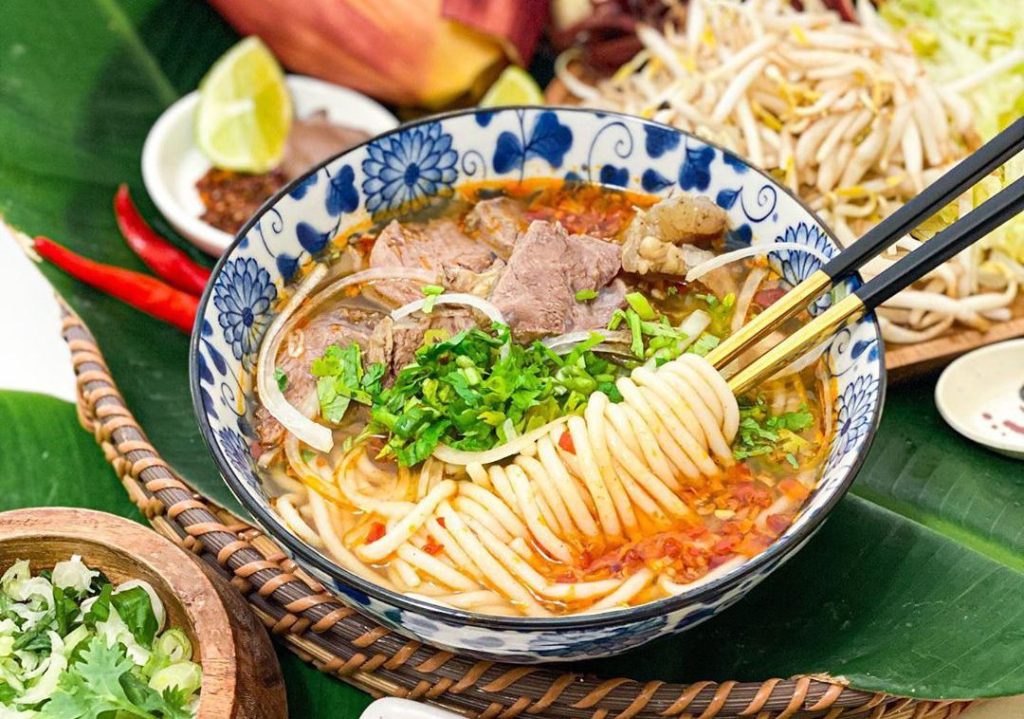
There’s nothing better than enjoying a steaming bowl of Bún bò Huế on a cool morning with family. The rich, spicy broth, tender pork hock, flavorful beef brisket, aromatic crab balls, and a touch of chili heat create a deeply satisfying dish that brings the taste of Huế to your table.
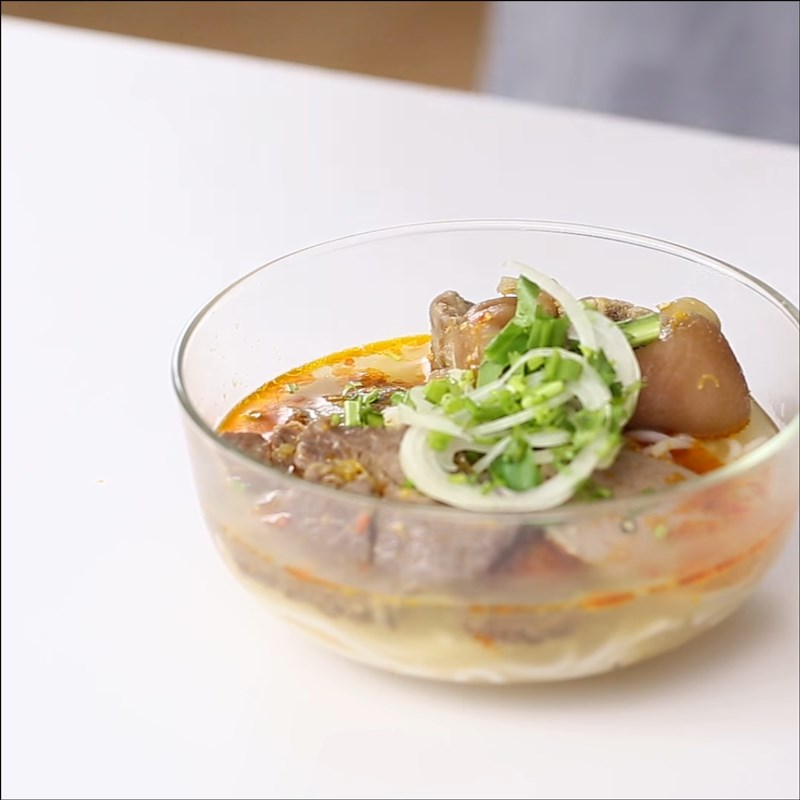
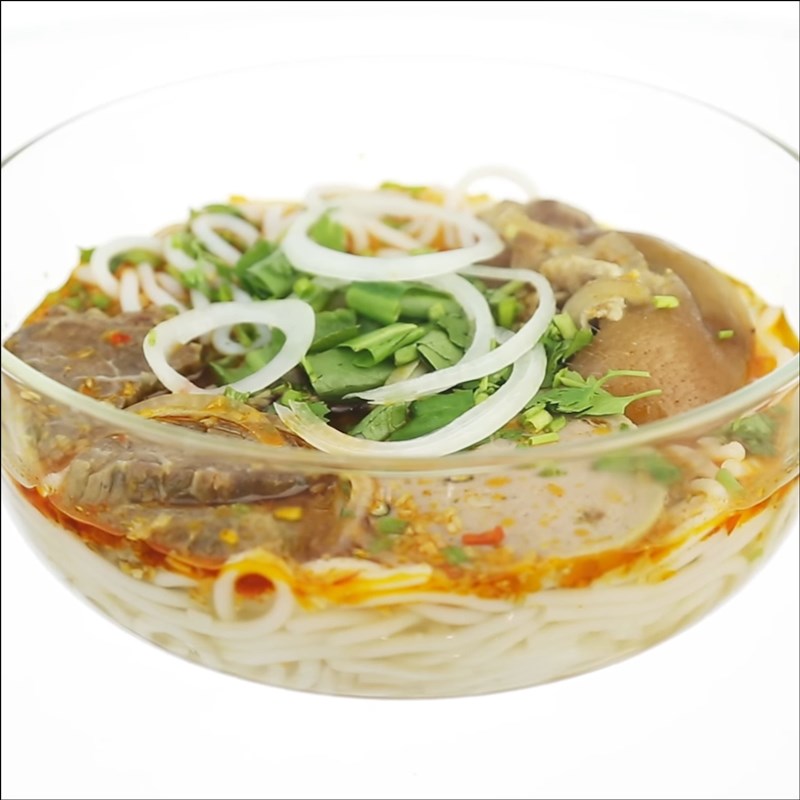
Bun bo Hue – The Fiery Soul of Central Vietnam
Among Vietnam’s most iconic noodle soups, Bun bo Hue stands apart — not only for its bold flavors and crimson broth but for the story it tells: one of royalty, resilience, and the fiery heart of Central Vietnam.
Born in Hue — the former imperial capital under the Nguyen Dynasty — Bun bo Hue reflects the city’s dual identity: the grandeur of royal cuisine and the grounded simplicity of common life. In the 19th century, Hue’s palace kitchens developed an intricate culinary tradition emphasizing balance, color, and meticulous preparation. Within this refined environment, the dish first appeared as “bun bo gio heo” — a beef and pork hock noodle soup served to nobility during ceremonial feasts. Over time, it left the royal walls and entered the city streets, where locals infused it with bolder flavors, more heat, and the humble genius that defines Vietnamese cooking.
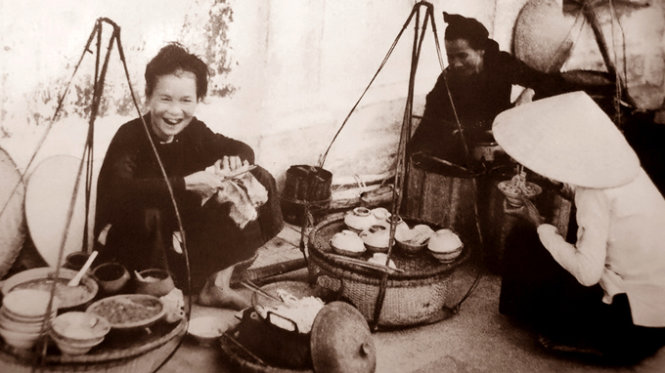
(Bun Bo Hue has been associated with Vietnamese people’s lives since ancient times.)
The broth is the soul of Bun bo Hue. It begins with slow-simmered beef and pork bones — sometimes crab or shrimp shells are added for a deeper sea flavor — and is seasoned with Hue fermented shrimp paste, lemongrass), chilies, and annatto oil for its signature red hue. Each element carries a piece of Huế’s geography and temperament: the saltiness of the shrimp paste echoes the nearby sea, the spice of chili mirrors the Central sun, and the fragrance of lemongrass recalls the tranquil gardens that surround the Perfume River.
When served, a steaming bowl of Bun bo Huefeels almost ceremonial. Thick, round rice noodles — heavier than those in phở — rest beneath tender slices of beef brisket, pork hock, and occasionally crab or shrimp balls, each absorbing the rich broth. On the side, a platter of fresh herbs, banana blossoms, bean sprouts, and lime brightens every bite, balancing the intensity with freshness and tang. The first spoonful is both a revelation and a remembrance: spicy yet soothing, robust yet elegant. The heat of chili strikes first, then yields to the depth of shrimp paste, the citrusy lift of lemongrass, and the gentle sweetness of simmered bones.
But beyond taste, Bun bo Hue carries the emotional geography of Central Vietnam — a land known for hardship, storms, and grace. Its flavors embody the Hue spirit: strong but refined, fiery but disciplined. It is said that people from Huế cook not just with technique but with temperament — the balance of restraint and passion reflected perfectly in this bowl.
Today, Bun bo Hue has journeyed far beyond its homeland, becoming a global symbol of Vietnamese cuisine. Yet, every bowl still holds a piece of Huế’s memory: the echo of palace drums, the scent of river mist, and the warmth of family kitchens. To taste Bun bo Hue is to taste the soul of a region — a place where the sacred meets the simple, where spice meets poetry, and where every drop of broth tells a story of endurance, devotion, and love.

(Delicious Bun Bo Hue)